
How We Built Harmny: A Performance Management Platform for Growing Teams
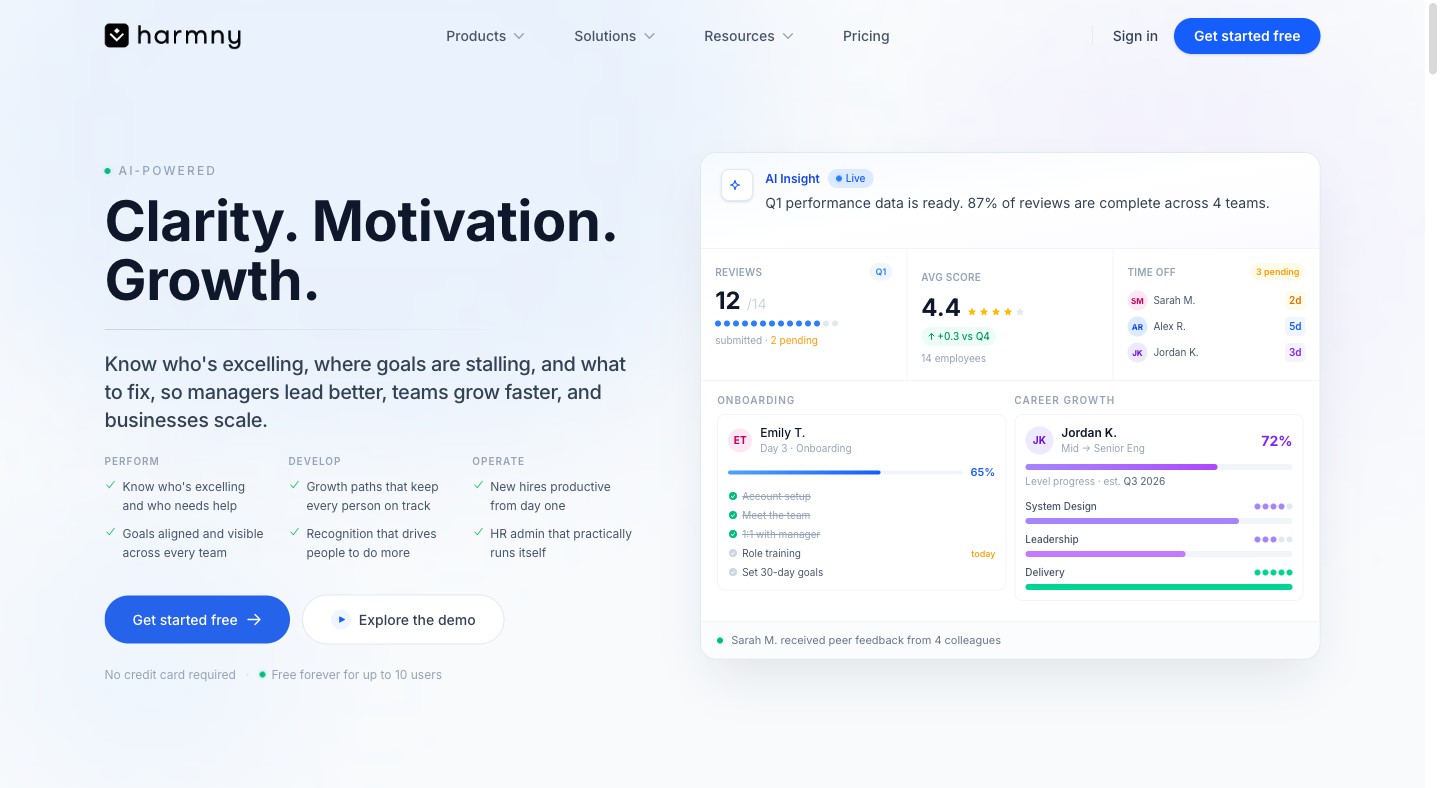
TL;DR: Growing teams were managing performance across spreadsheets, Notion, email, and Slack with no unified picture. We designed and built Harmny, an AI-powered performance management platform that consolidates all of it. This is what we identified, what we built, and why it works.
The Gap We Identified
At around 15 people, informal management stops being enough. Goals need to be set and tracked. Performance needs to run on a consistent cycle. People need to know what “doing well” looks like in concrete terms, and what a promotion actually requires.
Most companies at that size reach for a collection of tools: spreadsheets for performance reviews, Notion for OKR tracking, email threads for 1:1 follow-ups, Slack for recognition. Each tool handles one piece reasonably well. Together, they produce a fragmented picture that neither managers nor employees can actually use.
The enterprise tools built to solve this are designed for HR departments, not managers. Lattice, BambooHR, and 15Five require dedicated administrators, months of implementation, and pricing structures built for organizations with hundreds of employees. A 30-person startup running its first structured performance cycle doesn’t need six months of configuration. They need something that works next week.
That was the gap. We built Harmny to fill it.
What We Built
Harmny is an AI-powered performance management platform for growing teams. It consolidates the full employee lifecycle into one product.
Performance reviews that run themselves. Customizable evaluation templates per role and level. Self-reviews, manager reviews, and 360 peer feedback in a single cycle. Automated reminders keep cycles on track without anyone chasing people down.
Goals and OKRs with real visibility. Company objectives connected to team targets connected to individual key results, visible in one place. Progress check-ins with comments and status updates. Goal history that shows growth across quarters, not just the current one.
1:1 meetings that produce outcomes. Shared agendas built before each session, action items tracked to completion, and a full conversation history that both the manager and employee can reference between meetings.
Career development with concrete paths. Competency frameworks that define what every role and level requires. Development plans that track progress toward the next level. The question that drives more early turnover than any other is “what does senior mean here?” Harmny answers it, in writing, for everyone.
Recognition built into the workflow. Stars, badges, and challenges tied to actual performance data. Rewards that convert points into real benefits like extra PTO. Recognition that lives on the platform rather than in a Slack DM, so good work is visible to the whole team.
HR operations without a dedicated HR team. Onboarding checklists that get new hires productive from day one. Time-off management with custom policies and one-click approvals. Attendance tracking. An org chart that stays current automatically.
The platform includes an AI layer that surfaces insights across all of these: who’s excelling, where goals are stalling, and where a manager’s attention should go this week.
Harmny is free for teams of up to 10. No credit card required.
How Studio AM Approached the Build
Harmny was a full-scope engagement: naming, brand identity, product design, and front-end development.
Naming and Brand Identity
We started with the name. The brief called for something that communicated alignment and team coherence without the clinical register most HR software defaults to. “Harmny” works as a compressed form of harmony, the missing vowel making it feel like a product name rather than a dictionary word. Readable, memorable, and distinct.
The visual identity is intentionally restrained. Performance management tools are used daily, often for evaluations that carry real stakes for the people involved. An interface that draws attention to itself is the wrong tool for that context. The Harmny brand uses a clean wordmark, a structured color system built for readability, and a UI palette designed for extended daily use. Nothing competes with the information on screen.
Product Design
The central design challenge was making a comprehensive platform feel simple.
Harmny has a lot of features. A performance management platform that also handles OKRs, 1:1s, development plans, recognition, onboarding, and time-off is technically complex. The temptation when building something with that many surfaces is to expose all the features prominently and let users navigate.
We went the other direction. The primary user for Harmny is a manager at a company with no dedicated HR team. That person has a full job beyond managing people. Every feature had to be fast, clear, and self-explanatory. Setup had to be light enough that a first review cycle could be running in days, not months.
The interface went through extensive rounds of testing against that standard. The feedback that best captured what we were building toward came from an early customer: “Harmny is the first HR tool my managers actually opened without being asked.”
Development
The platform is built as a full-stack web application with real-time updates, a fully responsive mobile interface, and an architecture designed to scale from a 10-person early-stage startup to a multi-hundred-person organization. The AI features are integrated into the core product flows rather than added as a separate layer.
Results
Measured across Harmny customers between Q3 2025 and Q1 2026:
- 3x faster review cycles, from setup to final scores, compared to previous processes
- 87% of employees report clearer career expectations within 90 days of their company moving to Harmny
- 40% reduction in early-tenure attrition for customers using the onboarding and development features
- 2 hours saved per manager per week, recovered from coordinating status updates across disconnected tools
The attrition number is the one we’re most focused on. The career development features were designed specifically to address the “I don’t know what growth looks like here” problem that drives early exits at growing companies. The data confirms it works.
What This Project Means for Studio AM
Harmny is the largest digital product we’ve shipped. It’s a full demonstration of what Studio AM builds: not just brand identities and websites, but working products with real users, real data, and measurable business outcomes.
For founders and teams building a SaaS product, a digital tool, or a platform from scratch, this is what the process looks like when it works. Strategy before design, design before build, and a consistent focus on the end user at every stage.
If you’re working on a product concept and need a team to take it from brief to launch, start a conversation with us.
Frequently Asked Questions
Who is Harmny built for? Growing teams, typically 10 to 200 employees, that need structured performance management without the complexity of enterprise software. It’s especially well-suited for startups that have outgrown informal management but aren’t ready for Lattice or Workday.
What does Harmny replace? Most teams moving to Harmny were using some combination of Google Sheets, Notion, email, and Slack to manage performance, goals, and 1:1s. Harmny consolidates all of it and adds features that weren’t possible with disconnected tools.
Is Harmny free? Harmny is free for teams of up to 10 users with full feature access and no credit card required. Full pricing is at harmny.ai/pricing.
Can Studio AM build something like Harmny for my product idea? Yes. If you have a product concept and need a team to take it from design through launch, tell us about your project.